Municipalities of San Andrés
Complete list of the 2 municipalities of San Andrés in alphabetical order, by population, climate and founding date. All the information of each municipality.
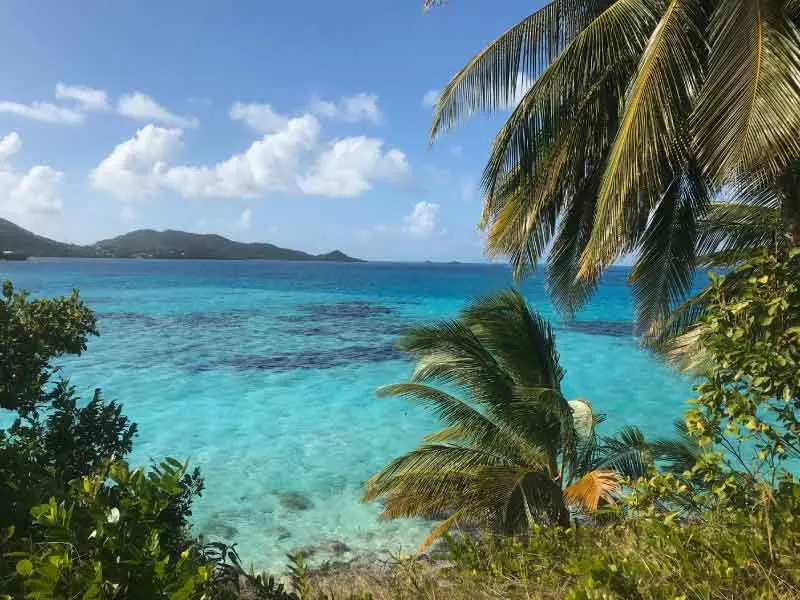
The department of San Andrés, officially called the Archipelago of San Andrés, Providencia and Santa Catalina, is the only insular department in the country. It forms the Insular region and is the only insular department in the country. It lies in the Caribbean Sea and is not counted again among the departments of the Caribbean coast. Located in the Caribbean Sea, approximately 775 km northwest of Barranquilla and only 230 km from the coasts of Nicaragua, the archipelago is made up of the islands of San Andrés, Providencia and Santa Catalina, as well as several cays and islets. With only 44 km² of total land area, it is the smallest department in Colombia, but its turquoise waters and coral reefs make it one of the most iconic tourist destinations in the country. The Seaflower Biosphere Reserve, declared by UNESCO in 2000, is one of the largest in the world and houses the third largest barrier reef system on the planet. Its inhabitants, the Raizals, are an Afro-Caribbean community with a culture, a language —English Creole— and traditions that distinguish them from the rest of Colombia.
LIST OF MUNICIPALITIES OF SAN ANDRÉS IN ALPHABETICAL ORDER
Below is the list of the 2 municipalities of San Andrés in alphabetical order:
- Providencia y Santa Catalina
- San Andrés
Below are the 2 municipalities of San Andrés listed including the area to which they belong:
| Municipality Name | Area |
| San Andrés | Main island (south of the archipelago) |
| Providencia y Santa Catalina | Northern islands of the archipelago |
MUNICIPALITIES OF SAN ANDRÉS BY POPULATION
| Name | Inhabitants |
| San Andrés | 70000 |
| Providencia y Santa Catalina | 6000 |
MUNICIPALITIES OF SAN ANDRÉS BY CLIMATE
| Municipality Name | Average Temperature |
| San Andrés | 29º c |
| Providencia y Santa Catalina | 27º c |
DATE OF FOUNDATION OF MUNICIPALITIES OF SAN ANDRÉS
The history of the islands is marked by the dispute between European colonial powers and the early presence of Afro-Caribbean communities. San Andrés was colonized by English Puritans from the Caribbean island of Bermuda in 1629, who arrived accompanied by African slaves who would give rise to the Raizal community. Spain claimed sovereignty over the islands in the Treaty of Versailles of 1783 and Colombia inherited them after independence in 1822. Providencia was likewise colonized by the English in the 17th century and has a different island history, with greater conservation of its natural landscape. In 2012, the International Court of Justice in The Hague partially ruled in favor of Nicaragua in a maritime dispute with Colombia, affecting the archipelago's exclusive economic zone. Complete list:
| Municipality Name | Date of Foundation / Establishment as municipality |
| San Andrés | 1629 (English colonization); Colombian municipality since 1822 |
| Providencia y Santa Catalina | 1631 (English colonization); Colombian municipality since 1822 |
MUNICIPALITIES OF THE DEPARTMENT OF SAN ANDRÉS
San Andrés, the main island, has an area of 26 km² and is the most densely populated in the Colombian Caribbean, with an economy based on mass tourism, duty-free trade —it has been a free port since 1953— and artisanal fishing. Its status as a free trade zone has made it a very popular shopping destination for mainland Colombians. Providencia and Santa Catalina, 90 km north of San Andrés, are smaller and quieter islands, with better preserved nature; the reef surrounding Providencia was included in the Guinness record as the third longest barrier reef in the world. In November 2020, Hurricane Iota, category 5, devastated almost the entire island of Providencia, affecting 98% of its homes, in what was one of the most serious natural disasters in the recent history of Colombia.