Cauca Department
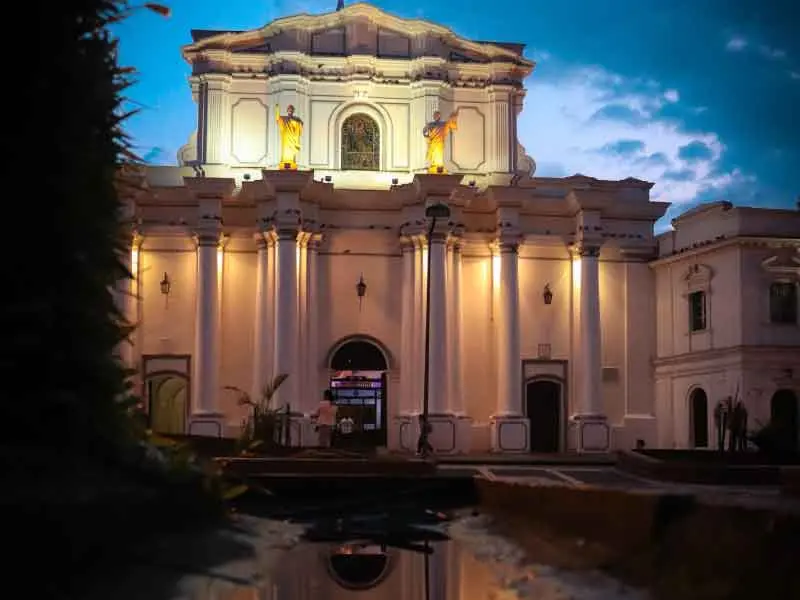
Cauca is in southwestern Colombia and its capital is Popayán. The capital sits in the Andean cordillera and the coast (Guapi) belongs to the Pacific region.
It also touches the Pacific region: the coast (Guapi, López, Timbiquí and Gorgona island). Popayán, the capital, sits in the Andean cordillera.
The department of Cauca, whose capital is Popayán, is in southwestern Colombia, in the cordillera of the Andean region. The coast (Guapi, López, Timbiquí and Gorgona island) belongs to the Pacific region.
It borders the north with the Cauca Valley and Tolima, east with Huila and Caquetá, south with Putumayo and Nariño, and west with the Pacific Ocean.
Its astronomical position is between 0°57′ and 3°20′ north latitude and 75°48′ and 77°57′ west longitude.
In the department of Cauca, several natural parks of Colombia are located, including the National Natural Park Isla Gorgona in the Colombian Pacific.
IMPORTANT DATA
CAPITAL
POPAYÁN
POPULATION
1’416.145
GENTILICIO
CAUCANO
SURFACE AREA
29.308 km²
GOVERNOR
Jorge Octavio Guzmán Gutiérrez
OFFICIAL WEBSITE
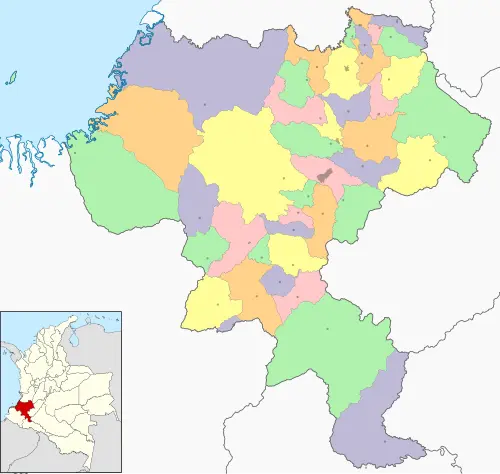
Map of the Department of Cauca
Follow the municipalities of Cauca located on the map:
Map by: Wikimedia Commons / CC BY-SA
PROVINCES OF THE DEPARTMENT OF CAUCA
The department of Cauca has 5 provinces, which are:
- Center
- North
- South
- West
- East
MUNICIPALITIES OF THE DEPARTMENT OF CAUCA
The department of Cauca has 42 municipalities listed below with their respective province:
Center
- Cajibío
- El Tambo
- La Sierra
- Morales
- Piendamó
- Popayán
- Rosas
- Sotará
- Timbío
North
- Buenos Aires
- Caloto
- Corinto
- Guachené
- Miranda
- Padilla
- Puerto Tejada
- Santander de Quilichao
- Suárez
- Villa Rica
South
- Almaguer
- Argelia
- Balboa
- Bolivar
- Florencia
- La Vega
- Mercaderes
- Patía
- Piamonte
- San Sebástian
- Santa Rosa
- Sucre
West
- Guapí
- López
- Timbiquí
East
- Caldono
- Inza
- Jambaló
- Paéz
- Puracé
- Silvia
- Toribío
- Totoró
HISTORY
During the pre-Hispanic period, it was inhabited by indigenous Jamundí, Pance, Caloto, Paéz, Pijaos, Patíasguanacas, and Guambiano peoples.
The main expeditionary was the conquistador Sebastián de Belalcázar, who arrived in the area in 1527; in the independence, the inhabitants of the department were against the independentist causes, however, there were several Caucan and Payaneses martyrs, in the same way, Cauca has given the Republic several presidents with long periods of government.
RELIEVE
This region of the country has a broken topography with elevations of over 3000 msnm such as the Sierra Nevada de los Coconucos, the Nudo de Almaguer or Macizo Colombiano, the páramos Letrero, Las papas and Santo Domingo, the Nevado del Huila, the volcanoes Pan de Azúcar, Sotará and Puracé, the Chorrillos mountain range, Santo Domingo and Sucubún, the serranías La vieja, San Pedro and Yarumal, the hills Bolivar, Guapí, Pelado and Zuñiga, among others; with regard to the coast, Cauca has some islands such as Ají, Micay, Soledad, Gorgona and Gorgonilla and the points Bodega, Voco and Guapí.
CLIMATE
It is a department that, due to the variety of its topography, does not allow defining a unique type of climates, although it is found in tropical humid and high-altitude forests; it is one of the zones with the highest rainfall in the world.
ECONOMY
Since the soil of the department is very fertile, the cultivation of agricultural products is quite high, represented in the production of coffee, potato, corn, fique, tomato, sugarcane, bean and onion.
In mining, the department exploits gold, the industry has grown slowly in recent years through the production of handicrafts and manufactured goods; cattle breeding for fattening and milk is another economic activity of the department.
NATURAL RESERVES
In the department there are four natural reserves:
- The Puracé National Natural Park,
- The Munchique National Natural Park
- The Gorgona National Natural Park
- The Nevado del Huila National Natural Park
HIMNO
Lyrics:
Gustavo Wilches Chaux
Music: Mario Gómez Vignes
CHORUS
Cauca, Cauca
A past that unites us
A purpose and an intention
A will to find a shared path
Towards a better world
I
Cradle of fertile waters
Mountain range of sun
Sea that licks a coast
Of gold, mangrove and drum
II
Open hand to life
Wild island, station
Where the wind settles
To try out its song
III
Fertile soil of valleys
That a volcano fertilized
Forest and clouds merge
In a green crucible
IV
Whites, Indians and blacks
A single illusion
Children of the same earth
Fruits of the same flower
You may also be interested in