Vichada Department
Vichada is one of the departments of Colombia located in the eastern part of the country, between the Orinoquía and Amazonic regions, its capital is Puerto Carreño.
Vichada belongs to the Orinoquía. There is a transition toward the Amazon; it is not in that region’s list of 6.
The department of Vichada is located in the east of the country, between the Orinoquía and Amazonian regions, its capital is Puerto Carreño.
Its location is between 2°55’48” of north latitude and 67°28’22” and 71°05’40” of west longitude from Greenwich.
It borders to the north with Casanare and Arauca, to the northeast with Venezuela, to the south with Guainía, to the southeast with Guaviare and to the west with Meta.
It is the second largest department and within this department is the Parque nacional El Tuparro.
IMPORTANT DATA
CAPITAL
PUERTO CARREÑO
POPULATION
77.276
GENTILICIO
VICHADENSE
SURFACE AREA
105.947 km²
GOVERNOR
Fulberto Guevara
OFFICIAL WEBSITE
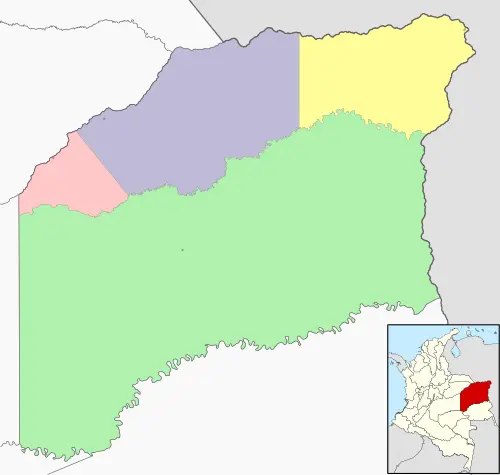
Map of the Department of Vichada
Following are the municipalities of Vichada located on the map:
Map by: Wikimedia Commons / CC BY-SA
MUNICIPALITIES OF VICHADA
The Vichada department has 4 municipalities listed below:
- Cumaribo
- La primavera
- Puerto Carreño
- Santa Rosalía
HISTORY
Its initial name was Picacho, in 1913 it became a comisaria through decree 523, being Buenaventura Bustos the first comisario, who in 1922 founded Puerto Carreño and named it in honor of Pedro María Carreño, minister of government at the time.
Only in 1991 it definitively adopted the name of department officially established in the national political constitution of the respective year.
RELIEF
The topography of the Vichada department belongs to a geographical unit of the Orinoquía, three-quarters of the territory are savannas and the remaining in forest.
To the south of the savanna there are undulations and the area is called serranía.
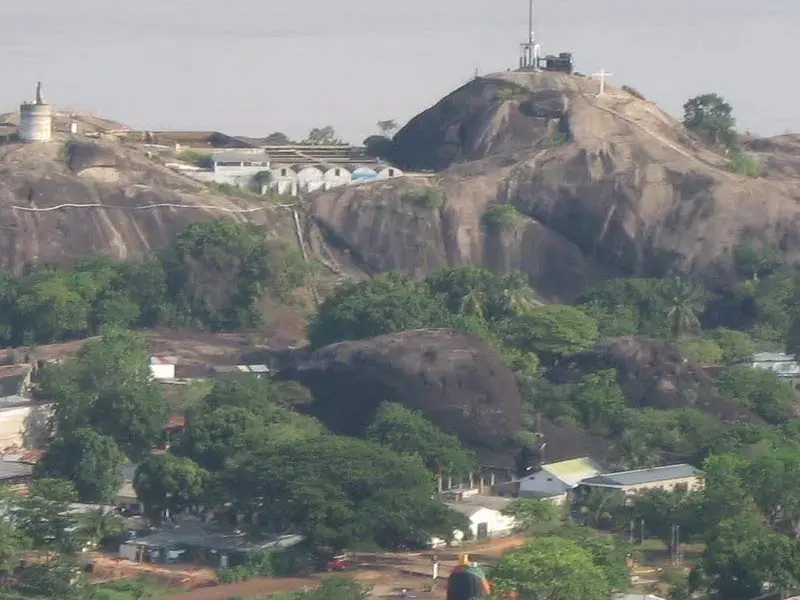
There are terraces and hills, some of which stand out are Vichada, Mona, Matavenia and Guaripa.
To the south of the Vichada river begins the forest.
HYDROGRAPHY
It has great importance for the survival of the inhabitants, to the east the Estrella Fluvial Colombiana is formed, constituted by the rivers Atapabo, Guaviare, the Inirida.
There are three important groups of rivers, the first formed by the Orinoco, Meta and Guaviare, the second Vichada, Tomo, Tuparo and Bita that feed their waters into the Orinoco and the third formed by Muco, Uva, Mataven.
The Orinoco is not navigable due to the rapids of Atures and Maipures.
CLIMATE
The Vichada department is a very forested area that presents a warm and humid climate, with an approximate temperature of 28°C.
ECONOMY
In the Vichada department, agricultural experiments are carried out at the Las Gaviotas Center to improve the quality of the soil.
The agrarian economy is based on subsistence crops such as cassava, rice, corn, cacao, and banana, in addition to Chiquichiqui for the manufacture of brooms.
The main economic activity is constituted by livestock, with the Pringado, Casanareño, and San martinero breeds of cattle predominating, some problems are presented in the nutrition of the cattle due to the low level of nutritional power in the pastures.
RESERVAS NATURALES
In the department of Vichada, we find two very important natural reserves:
- Tuparo Natural Park
- The Experimental Center las Gaviotas
HIMNO
Lyrics: Hugo Mantilla Trejos
Music: Hugo Mantilla Trejos
CHORUS
Forward Vichadense proud
always look forward
where the sun rises,
that morning has a cheerful awakening
and the dying afternoon in pale sunset.
Not a step back
always forward always
looking firm and fighter
gives progress to your land
that it waits silently
that your unbroken hand
gives it its redemption.
Walk with firm step,
thus confirming your ancestor,
and define with eagerness
your virgin region;
carry in your thought
the sea of distances
but your love as a son
very close to the heart.
Give peace to your soil
work without rest
make the furrow bloom
struggle with tenacity;
that this blessed land
cradle of your grandparents
will give you your effort
a paradise.
Be proud like the race
that distant epochs
crossed the Vichada
looking for the invader,
and that wrote with blood
in golden pages
the history of Colombia
a sunny afternoon.
You may also be interested in