Guainía Department
The Guainía department has Inírida as its capital and is located in the eastern part of Colombia, in the Amazonía region.
The department of Guainía has Inírida as its capital and is located in the east of Colombia, in the Amazon region.
It borders Vichada to the north, Venezuela to the east, Brazil to the south, and Vaupés and Guaviare to the west.
Its location is between 0°66′ and 2°79′ of northern latitude and 69°59′ and 73°44′ of western longitude.
Although it is one of the largest departments in the country, it only has around 40,000 inhabitants according to 2015 figures, making it the least populated and with 0.56 hab/km², it is the one with the lowest population density.
It was previously a comisaría, but since 1991 it has officially become a department of Colombia.
IMPORTANT DATA
CAPITAL
INÍRIDA
INHABITANTS
43,446
GENTILICIO
GUAINIANO
SURFACE AREA
72,238 km²
GOVERNOR
Arnulfo Rivera Naranjo
OFFICIAL WEBSITE
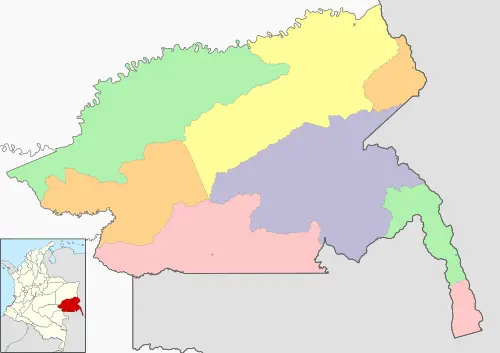
Map of the Guainía Department
Below are the municipalities of Guainía located on the map:
Map by: Wikimedia Commons / CC BY-SA
MUNICIPALITIES OF THE GUAINÍA DEPARTMENT
The Guainía department has 2 municipalities, which are:
- Barrancominas
- Inírida
CORREGIMIENTOS OF THE GUAINÍA DEPARTMENT
The department has 6 corregimientos listed below:
- Cacahual
- La Guadalupe
- Morichal Nuevo
- Pana Pana
- Puerto Colombia
- San Felipe
HISTORY
During the pre-Hispanic period, it was inhabited by indigenous peoples such as piapocos, curripacos, guahíbos, guayaberos, and cuibas, descendants of the Arawak. A character remembered with pain in the area is the Venezuelan colonel José Tomás Funes, who killed around 400 people in the area.
He was executed for his crimes in 1921. On July 13, 1963, it was erected as a Special Intendancy and in 1991, with the constitutional reform, it became a department.
It is inhabited by colonists from the interior and the neighboring country.
RELIEF
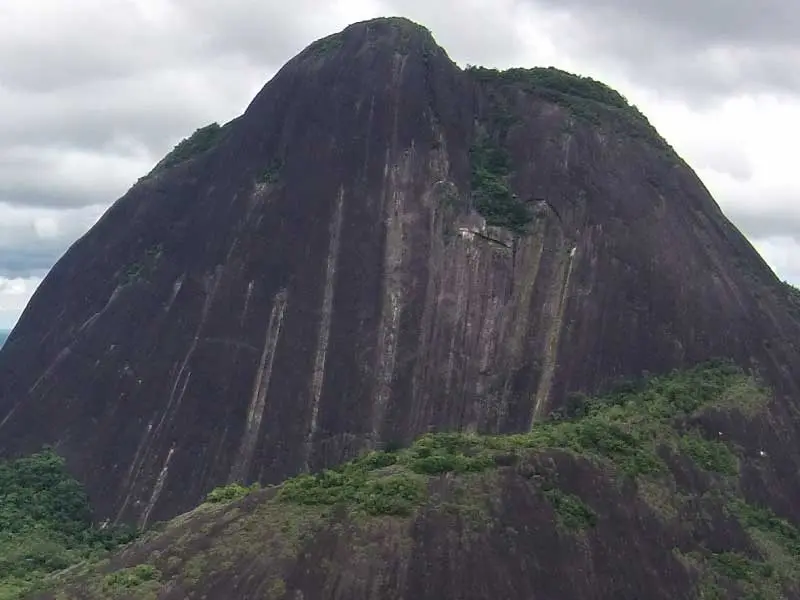
This area of the country is mostly flat, covered in tropical humid forest, cut by elevations of no more than 500 msnm such as the Mavecuri hills, the Sáquira, Rana, Pajarito, Sardinas, Salvaje Canapiari, and Aracuri hills.
HYDROGRAPHY
It is a privileged department in terms of water sources, as it is bathed by numerous rivers such as the Guaviare, Inírida, Atabapo, Orinoco, and Guanía rivers, the most important and largest in the area.
It is worth noting that in the department there are numerous lakes such as Zancudo, Guacamayo, Masacabi, El Venado, El Tigre, El Brujo, Sojo, and Piedra.
CLIMATE
The Guanía department has a tropical rainy climate, with two well-defined seasonal periods: summer between December and March; and winter between April and November.
ECONOMY
Due to the soil in the department being very acidic and very poor in organic matter, it is infertile, which is why the cultivation of food products is very low, generating a subsistence economy that has as its main productions cacao, yuca brava, banana, hybrid cacao, sweet yuca, pineapple, and sugarcane.
The exploitation of gold is another important activity in the area, just like the timber exploitation.
As for livestock, it is worth noting the breeding and fattening of cattle. Fishing and hunting are also activities that help, in a lesser proportion, the economy of the department.
NATURAL RESERVES
In the department there is a natural reserve: Reserva Natural Puinawai.
HYMN
Lyrics: Vicente Bohórquez
Music: Gill Arialdo Rey
CHORUS
Guainía noble land
unmistakable beauty
my pride in being born where I am
I adore my land with love
long live Colombia, the jungle and Guainía
we sing always your children everywhere
we are Guainians of race and bravery
and we are noble like a sunset.
I
Hail proud and thriving Guainía
that has preserved with nobility your haughtiness
the profile of a brilliant morning
over furrows of love and faith
embedded in the triple border
that are marked by Venezuela and Brazil
you are a pledge of sovereignty
and an imperious guardian of the country.
II
You offer it gently to the colonizers
the hope of a new ideal
opportunity for progress and work
own land, warmth of friendship
the Guainians united will give
to the new Colombia honor and prestige
waving the flag ahead
or the rifle if duty commands.
III
Your rivers are green mirrors
that reflect the very tropical sun
and fragment into a thousand the cachiveras
of their waters the immense torrent
your jungles are very giant emporiums
of wealth without end
living examples that man has not yet marked
that promise a happy future.
You may also be interested in