Guaviare Department
The Guaviare department is located in the Amazonia region and its capital is San José del Guaviare.
The department of Guaviare is located in the Amazon region and its capital is San José del Guaviare.
Its location is given between 2°54′ and 0°39′ of north latitude and 69°59′ and 73°38′ of west longitude from Greenwich.
It borders the north with the Guaviare River that separates it from the Meta department and Guanía, to the west with the Meta, to the east it borders with the Vaupés department and to the south with Caquetá.
It was created on July 4, 1991 by the new Colombian Political Constitution. Until that moment it was a national territory with a Comisaría character, formed since the then also Comisaría of Vaupés, on December 23, 1977.
IMPORTANT DATA
CAPITAL
SAN JOSÉ DEL GUAVIARE
POPULATION
115,829
GENTILICIO
GUAVIARENSE
SURFACE AREA
53,460 km²
GOVERNOR
Yeison Ferney Rojas Martínez
OFFICIAL WEBSITE
Map of the Guaviare Department
Follows the municipalities of Guaviare located on the map:
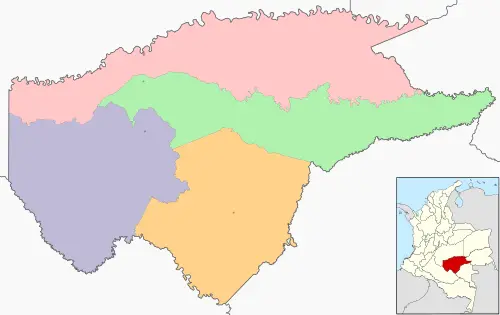
Map by: Wikimedia Commons / CC BY-SA
MUNICIPALITIES OF THE GUAVIARE DEPARTMENT
The Guaviare department has 4 municipalities which are:
- Calamar
- El Retorno
- Miraflores
- San José del Guaviare
CORREGIMIENTOS E INSPECCIONES
The Guaviare department has the following corregimientos e inspecciones listed below:
- Inspection La Libertad Jurisdiction of the municipality of El Retorno
- Corregimiento El Capricho Jurisdiction of the municipality of San José del Guaviare
- Corregimiento Charras-Boqueron Jurisdiction of the municipality of San José del Guaviare
- Morichal territory Puinave located between the Inírida and Papunaua rivers and the Guainía and Vaupés departments.
HISTORY
There were several tribes in the area but they were exterminated and those that survived need help and protection from the inhabitants of Fuga, Barracón, Cañón negro, Cachivera del Nare, Barranco Colorado, Corocoro, Asunción, La Rompida, Barranquillita, sal, Jabón, Mocuare, Barranco Ceiba and Laguna de Araguato.
In 1910, part of Caquetá was taken to form Vaupés, which had Calamar as its capital, now belonging to Guaviare,
On December 23, 1977, the Guaviare Comisaria was created, in 1943 the first granary was built and only in 1950 the church and school were built, in 1958 the first fishing company was created.
Finally, the 1991 Constitution recognizes it as a department.
RELIEF
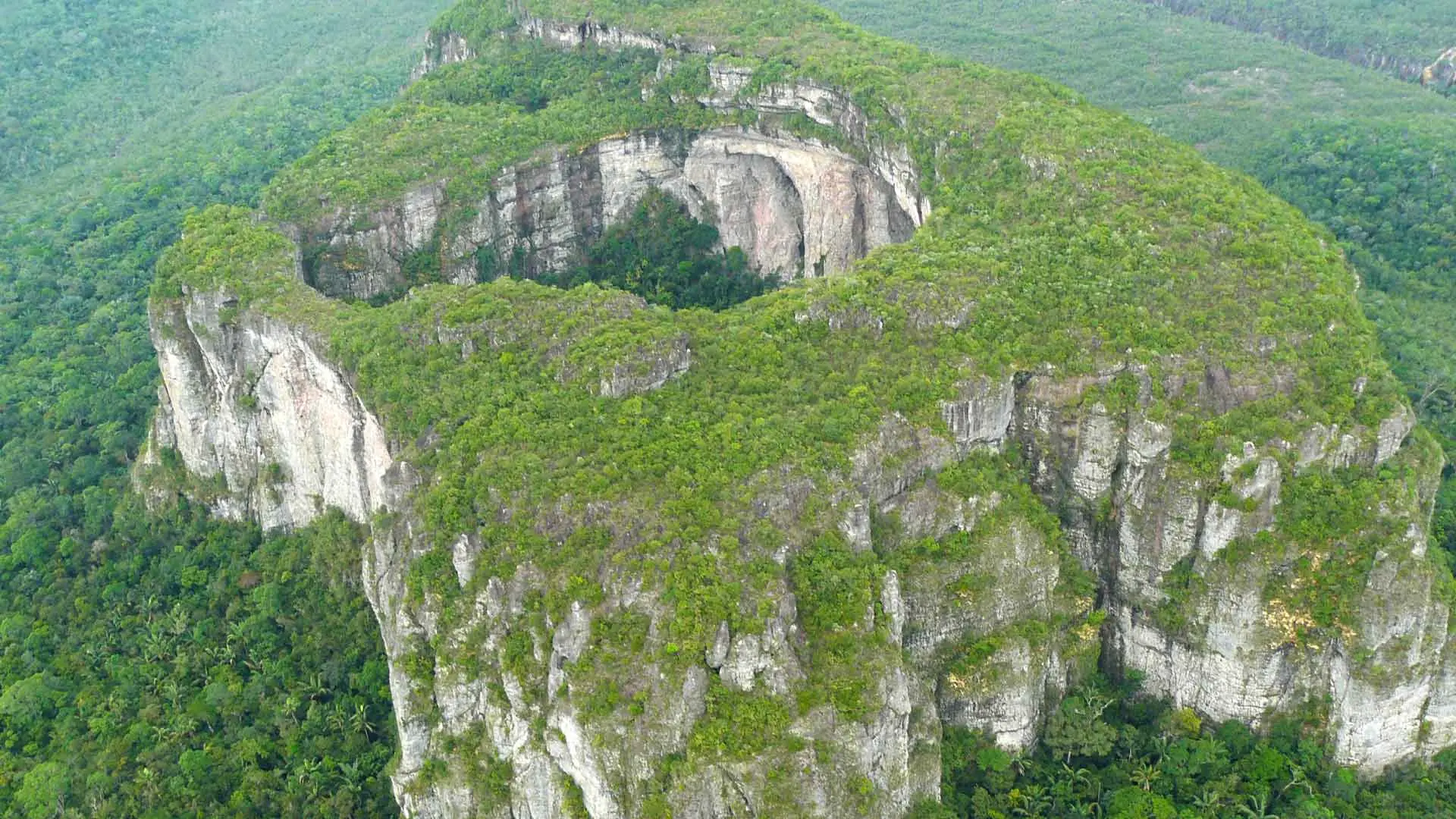
The relief of Guaviare is flat and slightly undulating except for the Serranías de San José and Chiribiquete and the Cerros de Campana, Camareto and Otare.
They also present lands covered by virgin forest with gallery forest of humid type, La Serranía de Chiribiquete is a formation to the south of San José where access is almost impossible, this hill is of the Araucana formation, it has an extension greater than one million hectares.
HYDROGRAPHY
The Guaviare River is the most important, in its origin the Eastern Cordillera, it is born with the name of Guayabero; it has a total length of 1,350 Km of which 620 are navigable.
The rivers of this region do not originate from a spring but from high precipitation outlets.
CLIMATE
The climate of the Guaviare department is hot and humid, the department is located in the equatorial zone, that’s why it has defined periods of rain.
The heaviest rains occur between the months of June and August and can be classified as a summer with elevated temperatures from December to March, the temperature variation oscillates between 25°C to 27°C with notable drops at night, especially during winter when it reaches 11°C.
ECONOMY
Fishing and agriculture have been cataloged as the most important sources of income in the region, that’s why there are agreements from the Netherlands to implement alternatives in livestock and agriculture.
They cultivate cacao, banana, corn, and rice; in addition, they cultivate inchín, palm, fruits, cane, peanut, yuca, and bean.
From the timber species, achapo and nocuito are exploited for the construction of homes, and granadillo for the trapiches, in addition, they work the three tables, yema de huevo, guacamayo, bálsamo macano, yellow flower, among others.
NATURAL RESERVES
In the Guaviare department, we find much natural reserve, we can mention the Guayabero rapids, the Venado, the Cedro, Espejo, Jamuco, El Salado, Lago Makú, Cerro Alto, Cerro Santa Ana, and Cerro Paloma lagoons.
HIMNO
Lyrics: Máximo Martínez
CHORUS
Oh Guaviare, in your bosom I was born, Oh Guaviare, in your bosom I find myself And today I seek freedom for you. We will sing together, we will always honor God, homeland, flag, and national anthem. We will live together, we will always march with faith, hope, homeland, and freedom.
IYour plain and your forest meet, Your beauty is exalted by a brush, The master created your relief and there an Indian located San José. Capital of hope majestic today it is seen and I, proud, proclaim your name and I will die to see you.
IIGuayabero and Ariari formed, With their waters the river also And on its coast we find the Meta With Vichada and Guainía at the same time Apapóris, feels jealous Of Inírida and Vaupés Because they are born inside your chest, They also irrigate their beautiful orchard.
IIIThe native and colonizer feel proud, Of making you grow, Since they did not unite their blood And the cabúco one day saw it born. Strong men who work With courage and honesty With their effort, the towns emerged That today present themselves with great pride
IVLike centaurs, your children united And will offer a better future Our shield is called progress And it is an example of great dignity. Oh! Colombia, my homeland God bless your goodness, that the spirit of the Guaviarense Today fill you with glory and peace.
You may also be interested in