Department Of Arauca
Arauca is one of the departments of Colombia, highlighted by its livestock and its llanero landscapes. Find more information here.
The department of Arauca whose capital has the same name: Arauca, is located to the east of the country, in the Orinoquía region, bordering Venezuela, to the south with Vichada and Casanare, and to the west with Boyacá.
Its astronomical position is between 6°02′ and 7°06′ north latitude and 69°27′ and 72°22′ west longitude.
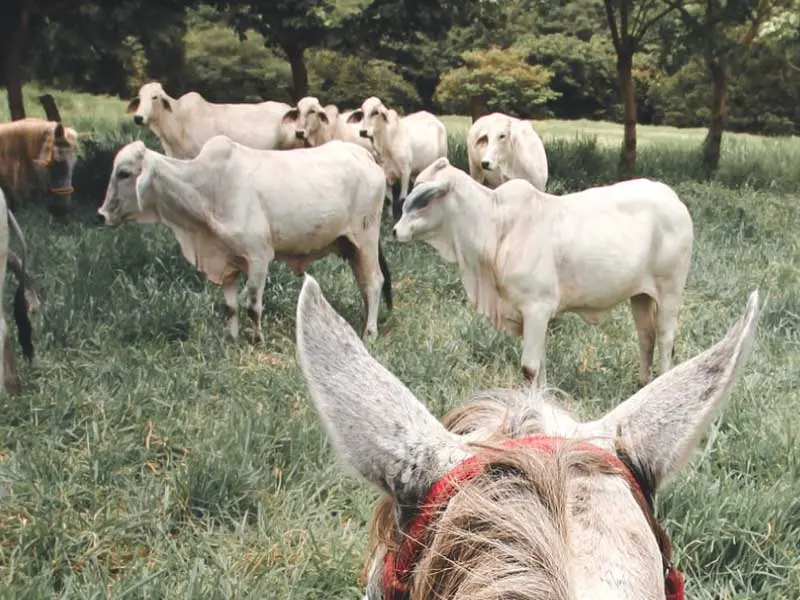
Its main economic activity is livestock in the eastern plains of Colombia.
It is one of the least populated departments in Colombia since most of it consists of plains used as pastures for livestock.
IMPORTANT DATA
CAPITAL
ARAUCA
INHABITANTS
270,708
GENTILICIO
ARAUCANO
SURFACE
23,818 km²
GOVERNOR
Renson Jesús Martínez Prada
OFFICIAL WEBSITE
Map of the Department of Arauca
Next, the municipalities of Arauca located on the map:
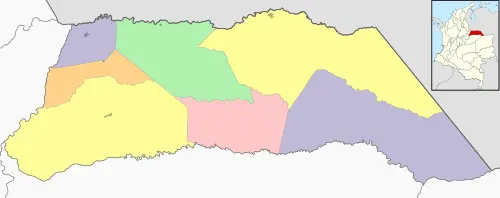
Map by: Wikimedia Commons / CC BY-SA
MUNICIPALITIES OF ARAUCA
Next the 7 municipalities of Arauca in alphabetical order :
- Arauca
- Arauquita
- Cravo Norte
- Fortul
- Puerto Rondón
- Saravena
- Tame
MUNICIPALITIES OF ARAUCA BY POPULATION
Next the 7 municipalities of Arauca in a list ordered from the most populated to the least populated:
| Name | Inhabitants |
| Arauca | 89,712 |
| Tame | 53,266 |
| Saravena | 47,594 |
| Arauquita | 41,743 |
| Fortul | 25,745 |
| Puerto Rondón | 3,837 |
| Cravo Norte | 3,293 |
HISTORY
During the pre-Hispanic period, it was inhabited by indigenous araucos, achaguas, tunebos, piapocos, yaruros, etc. The main expeditionary was the conqueror Jorge Spira who arrived in the area in 1535, in 1628 the Jesuits arrived in the area and in the 18th century the Augustinian Recollect fathers.
In 1772, don Juan Francisco Lara founded a farm where the city of Arauca is today and there the Capuchin fathers founded a catechesis center in 1785. In 1955, it was erected as an intendancy and in 1991 as a department.
Arauca, its capital, was initially called Villa de Santa Bárbara de Arauca, founded by Father Juan Isidro Daboin, on December 4, 1780, it was elected in 1818 as the provisional capital of the Republic.
RELIEF
This area of the country is mostly flat, cut by elevations of up to more than 5,000 meters above sea level in the Sierra Nevada del Cocuy; it is covered by natural pastures that are used for breeding and fattening livestock.
HYDROGRAPHY
It is a privileged department in terms of water sources, since it is bathed by the Arauca, Meta, and Cinaruco rivers, the most important in the area; other rivers that cross the department are: Casanare, Lipa, Tame, Banadía, Bojabá, and Ele.
CLIMATE
It is a department with a tropical savanna climate with high temperatures and rainfall.
ECONOMY
Due to the fact that the department’s soil is very fertile, the large extensions of grass are the common denominator of the area that favors livestock as the main economic activity of the department, followed by forestry and border trade with Venezuela.
In relation to agriculture, the department produces corn, banana, cassava, cocoa, sugarcane, beans, and coffee.
The mining activity with oil exploitation is a new economic possibility for the department that is encouraged by new discoveries.
NATURAL RESERVES
In the department, there is a natural reserve: the Parque Nacional Natural del Cocuy, which is a hydrographic reserve with an area of 306,000 hectares and extends through the departments of Boyacá and Casanare.
ANTHEM
Lyrics:
Abelardo Madariaga
Music:Víctor Manuel Guerrero
CHORUS
Let's sing, Araucans,
the glories of the plains,
the centaurs of our vastness
are coming, it seems that we hear
the clashes of the lances
that in Boyacá gave us
eternal freedom.
I
For you, homeland, we will give
the afternoons of topaz
and even the fiery steed
with a mane of hurricane,
the yearning herons
that cross the space
and the hands of silk
that water the garden.
II
Oh! Arauca, murmuring
that licks the plant
of the sultana city
rolls to the wide sea,
your permanent lullaby
puts the plains to sleep,
and it is a voice that sings
the glories of another age.
III
From Santander the sword
that left shining
is seen today as yesterday,
when the great homeland
is threatened from the front
the proud Araucan
will know how to defend it.
IV
To reach sacrifice
is our longing for you,
and to defend the glorious tricolor
also,
while the sun's rays
gild the sky of Arauca,
let's march, for the call to arms
is already being heard.
See The Orinoquía Region of Colombia
You may also be interested in