Páramos of Colombia
Colombian páramos are part of the great variety of ecosystems that make up the country, filled with biodiversity, water resources, and unique animal and plant species.
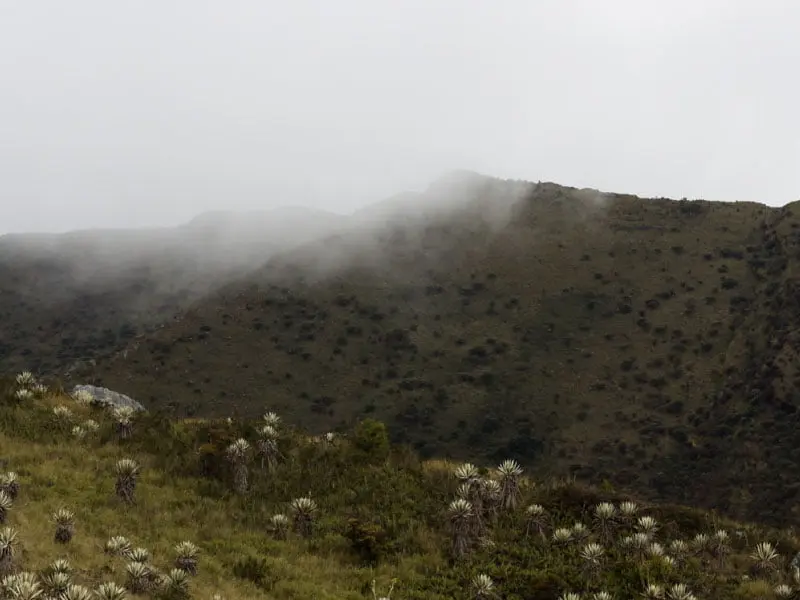
Colombian páramos are part of the great variety of ecosystems that make up the country. These ecosystems are filled with biodiversity, abundant water resources, and unique animal and plant species found nowhere else on the planet. This is why protecting and conserving them is vital, as they are an essential part of life in the country. In South America, páramos are located in the northern sector of the Andes mountain range, specifically in Venezuela, Colombia, and Ecuador.
WHAT ARE PÁRAMOS?
Páramos are sometimes called "dwarf forests" due to the appearance of their landscapes, where small shrubs and frailejones (Espeletia) predominate — the latter being the emblematic plants of this ecosystem. Páramos are considered today to be the water factories of the planet, which is why their preservation is crucial for the survival of the planet, and why there are initiatives worldwide dedicated to the conservation of these important ecosystems.
The páramo is an intertropical alpine ecosystem dominated by shrubland vegetation, classified as montane grassland and shrubland. Páramos are generally found at altitudes ranging from approximately 3,400 meters above sea level up to 4,000 or 5,000 meters above sea level, and can be divided into sub-levels: subpáramo, páramo, and superpáramo.
The vegetation of the páramos exhibits a series of adaptations that allow it to survive in a harsh environment. Many plants have hairs to retain heat and hard leaves that prevent water loss through evapotranspiration. In general, páramo plants are adapted to protect themselves from cold and wind; they range from frailejones (see image below) and achupallas to some tree species that can reach several meters in height.
The best-known páramos are found in the Andes of South America, however, there are also ecosystems similar to páramos in the mountains of southern Central America, East Africa, and New Guinea.
The Sumapaz páramo, located in Colombia, is considered the largest in the world.
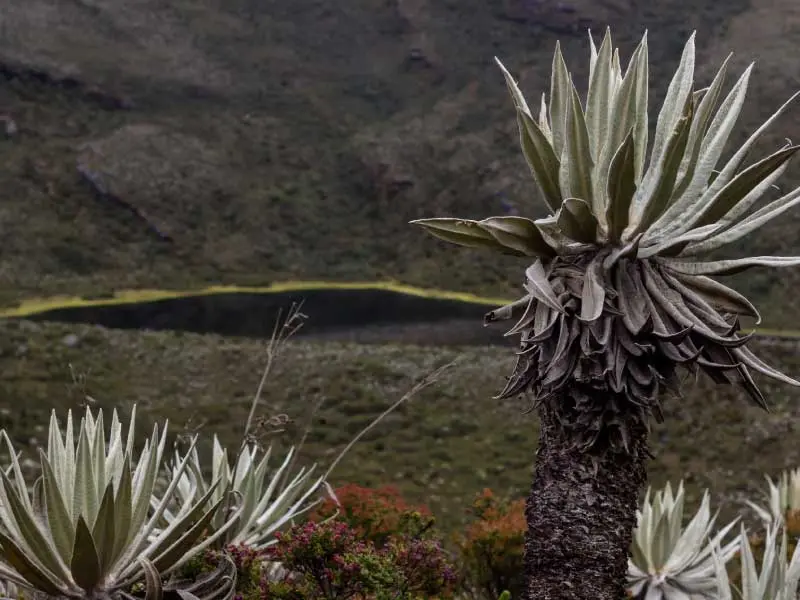
The páramo ecosystem is characterized by low temperatures and generally humid conditions, due to frequent rainfall and the constant fog that defines these cold places. They are found in:
- Colombia
- Ecuador
- Venezuela
HOW MANY PÁRAMOS ARE THERE IN COLOMBIA?
Colombia is home to a large number of páramos, which serve as refuges for endemic species and water factories for the nation. There are a total of 36 páramo complexes in Colombia, according to the latest mapping by the Humboldt Institute. The vast majority are located in the high areas of the Andes mountain range, with a smaller number in the Sierra Nevada de Santa Marta. These páramos cover approximately 2,906,137 hectares, equivalent to 3% of the country's surface area.
In 2018, Colombia completed the delimitation of 30 páramos and formalized its environmental policy dedicated to the protection of these indispensable ecosystems for the conservation of life.
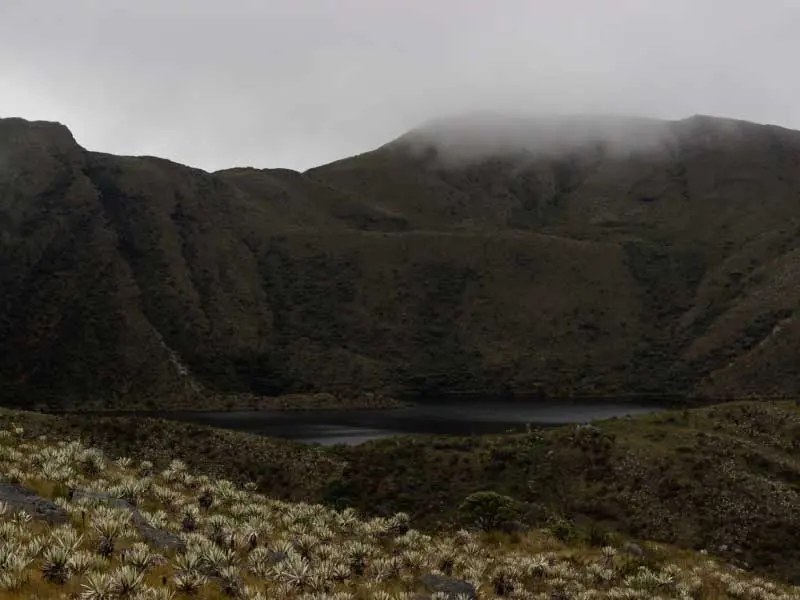
It is worth highlighting that Colombian páramos are extremely important ecosystems, as Colombia has the largest expanse of páramos in the world, with approximately 50% of the total existing páramos. They are distributed across the three mountain ranges (Eastern, Central, and Western) originating from the northern part of the Andes and in the Sierra Nevada de Santa Marta. As mentioned earlier, Colombia is also home to the largest páramo in the world: Sumapaz.
Although the department of Boyacá is the undisputed king when it comes to Colombian páramos.
Below are the departments with the largest páramo territory, from largest to smallest:
- Boyacá (the department with the largest páramo area in Colombia)
- Cundinamarca
- Santander
- Cauca
- Tolima
- Nariño
THE IMPORTANCE OF COLOMBIAN PÁRAMOS
The Sierra Nevada de los Coconucos is one of the main volcanic axes in the south of the country. It extends approximately 7 kilometers and has more than 8 active volcanoes, with large areas of superpáramo above 3,900 meters above sea level and devoid of vegetation.
In the Colombian Massif, the Andes mountain range gives rise to the Eastern range. It covers an area of 3,800 km² and, due to its great water capture capacity, it has been called the "Colombian River Star." It is extremely important for the country because the Magdalena, Caquetá, Cauca, and Patía rivers, as well as several of their tributaries, originate in its páramos.
PÁRAMOS OF THE SIERRA NEVADA DE SANTA MARTA
The Sierra Nevada de Santa Marta is an isolated massif separate from the Andes mountain range and is also the highest coastal mountain in the world. It is home to the northernmost páramo region in Colombia. It covers 17,000 km², has 50 localities with páramo ecosystems, and contains the highest snow-capped peaks in the country:
- Bolívar: 5,770 m above sea level
- Simons: 5,560 m above sea level
- Colón: 5,750 m above sea level
DISTRIBUTION OF PÁRAMO LOCALITIES
Colombian páramos are distributed across several subregions, each containing different páramo localities. Below are the approximate numbers of páramo localities in each region:
- Southern volcanic axis: 70 páramo localities
- Western mountain range: 12 páramo localities
- Central mountain range: 135 páramo localities
- Eastern mountain range: 450 páramo localities
- Sierra Nevada de Santa Marta: 50 páramo localities
LIST OF COLOMBIAN PÁRAMOS
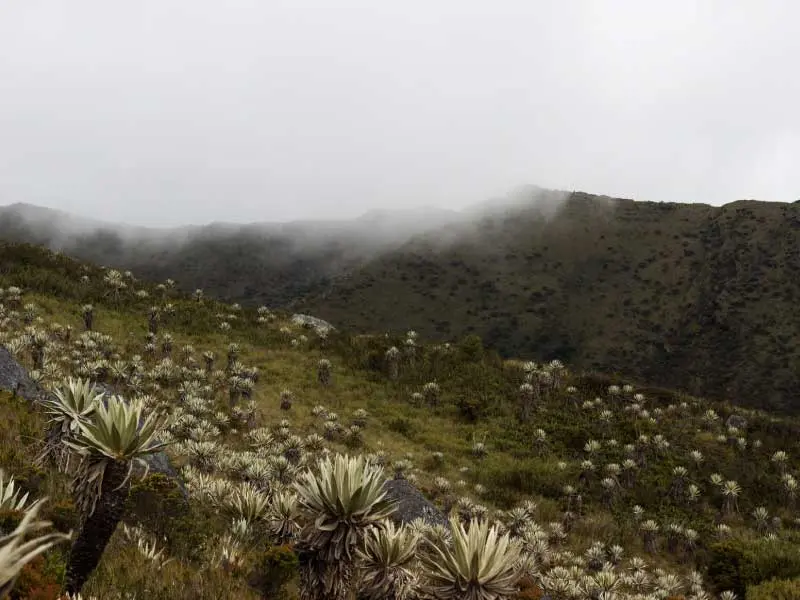
Among the most important páramos of Colombia we find:
- El Macizo Colombiano
- Sierra Nevada de Santa Marta
- Sumapaz
- Chingaza
- Las Hermosas
- Santa Isabel
- Tolima
- Ruiz
- Pisba
- Cocuy
- Santurbán
- Berlín
- El Almorzadero
- La Rusia
- Guantiva
- Betulia
- Barragán
- Chili
- Torra
- Bordoncillo
- Galeras
- Azufral
- Cruz Verde
- Guerrero
- Monte de Leona
- Pan de Azúcar
- Yaguaquer
- Guasca
- Gachalá
- Medina
- Tasares
- Tatama
For more information on studies about Colombian páramos, visit the website of the Humboldt Institute.
You may also be interested in