Department of San Andrés and Providencia
San Andrés and Providencia, whose capital is San Andrés is the only insular department of Colombia. Composed of several islands.
It lies in the Caribbean Sea and forms the Insular region. It is not counted again among the 7 departments of the Caribbean coast.
San Andrés y Providencia
also known as The Archipelago of San Andrés, Providencia and Santa Catalina whose capital is San Andrés, is located in the western part of the Atlantic Ocean, 775 km (480 nautical miles) northwest of the Atlantic coast of the continental territory of the country and 220 km (140 nautical miles) from the eastern coast of Nicaragua.
Its coordinates are 12°00′ and 16°30′ north latitude and 78°00′ and 82°00′ west longitude from Greenwich at 400 miles from the continental coast.
With 52 km² it is the least extensive department in the country but not the least populated, on the contrary, with 1470 inhabitants/km², it is the most densely populated. This has produced a special situation in terms of resource availability.
It is the only insular department of Colombia and the main languages spoken there are San Andrés Creole, Spanish and English.
The closest city in the Colombian continental territory is Cartagena in the department of Bolívar.
IMPORTANT DATA
CAPITAL
SAN ANDRÉS
INHABITANTS
78,413
GENTILICIO
SANANDRESANO
SURFACE AREA
52.5 km²
GOVERNOR
Nicolás Iván Gallardo Vásquez
OFFICIAL WEBSITE
Map of the Department of San Andrés and Providencia
Follows the municipalities of San Andrés and Providencia located on the map:
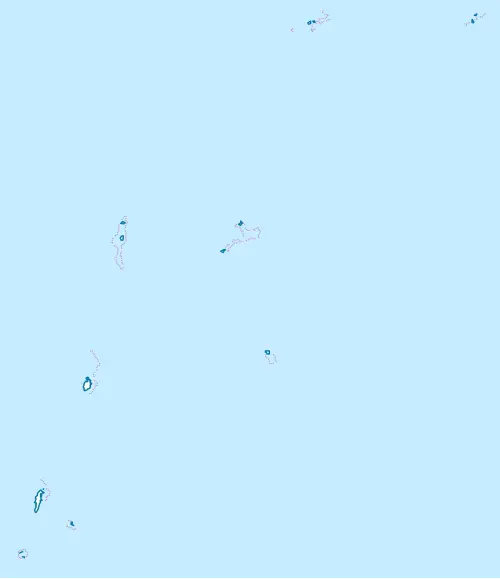
Map by: Wikimedia Commons / CC BY-SA
HISTORY OF SAN ANDRÉS AND PROVIDENCIA
The first European settlements in the archipelago were of English colonists who arrived from Bermuda and Barbados among others and settled in Santa Catalina and Providencia.
Between 1670 and 1680 Henry Morgan (popularly known as Pirate Morgan) and Eduard Mansvelt, had their base of operations in San Andrés.
In 1775 the Captaincy General of Guatemala, delegated the first Spanish governor, Lieutenant Tomás O´Neille, with the mission of expelling the English and Dutch from the archipelago, under the authority of Viceroy Antonio Caballero y Góngora.
Meanwhile, the production and export of cotton was at its peak and Spain began to take an interest in the islands.
The Frenchman Louis Aury (1788 – 1821), a sailor and corsair, supported the independentist causes in the entire Caribbean from the islands. Between 1818 and 1821 the Frenchman took the islands and put himself at the service of Simón Bolívar’s troops.
San Andres has in its culture a root influence of Africans, British, Scots, Dutch, Irish, French, Spanish and Colombians.
CLIMATE
The Island enjoys a beautiful warm climate, oscillating between 26°C and 29°C. In general, throughout the year, the rains are defined by a summer and a winter season.
The dry season can last an average of five consecutive months, while the other months are rainy season and strong winds, mainly during the second week of June.
San Andrés and Providencia has marine winds throughout the year, whether in summer where it mitigates the heat or in winter due to the storms that present themselves in the Caribbean Sea.
GASTRONOMY
The basics are crab, coconut, snail. The main typical dishes are the rondón (seafood soup cooked in coconut milk with yam, plantain and fruit of the bread), the crab soup, snail and fish balls, the stuffed crab, the fish stew, in addition to the assorted in cookies and cakes since they are prepared in wood stoves and in whose preparation the coconut milk cannot be lacking, consequently making its flavor unique.
ECONOMY
The economy of San Andrés and Providencia is primarily tourism and trade, which has many hotels, restaurants and natural attractions such as its beautiful beaches, cays, natural parks and botanical garden, also offers the tourist an endless number of activities to have fun and enjoy the Island.
It also has crustacean fishing, seafood and snapper as its main seafood, as for agriculture it is little for sustenance, so many products have to be imported from the rest of the country, especially from Cartagena de Indias.
FIESTAS
Among the festivals of this region, the Green Moon Festival or also called Festival of the Green Moon stands out, where a great display of Afro-Caribbean cultural manifestations is observed, it is celebrated in September.
NATURAL RESERVES
Old Point Mangrove National Park
The Old Point Mangrove Regional Park, It is a natural wonder that takes us to be aware of the importance of the conservation and preservation of the mangroves since they are a source of life for the whole world. In this natural reserve we can see the mangroves and some species such as lizards, iguanas, snails, mussels, crabs, and migratory and endemic birds.
It is located in the Hooker and Haynes bays, on the eastern coast of the island of San Andrés.
Cayo Santander
Its official name is “Cayo Santander” but everyone in San Andrés knows it as Cotton Cay, which in English means cotton cay; since in this beautiful cay was the perfect area for the English colonists to deposit the cotton and coconut crops that were very profitable in those years. The name of this cay comes from the independentist Francisco de Paula Santander.
San Andrés Ecological Park
The San Andrés Ecological Park is a beautiful place where you will find the fauna and flora of the island, so you can have a deeper knowledge of the place, it contains its own beauty where you can rest in the middle of all this natural wealth.
You can visit the San Andrés Ecological Park, it is located very close to the San Andrés Airport and the city center.
Laguna Mc Bean Vieja Providencia
It is part of the Seaflower Biosphere Reserve since 2000 and is located within the archipelagos of San Andrés and Providencia.
It is a small park that belongs to the third largest coral reef in the world and has an assignment of great importance, which is the conservation and preservation of the species native to this area of the Caribbean.
Jardín Botánico de San Andrés
According to scholars, this botanical garden boasts such surprising vegetation that has survived since the era of the dinosaurs until the present day.
It is under the care of the University of Colombia and you will be able to access scientific data on everything the park contains. You will also find an observation deck that rises above 12 meters in height, from which you can observe all the trees and vegetation that the garden offers.
PLACES TO VISIT
There are many places to visit, but these are some of the most important for tourists:
Isleña House Museum and Pirate Morgan's Cave: It is a museum created by the locals where visitors can learn about the culture and customs of the islanders, including their traditional dance, a few steps away you will find Pirate Morgan's Cave, where you can learn about the history of this corsair and the place where he hid his treasures.
The Hill: Here you can appreciate the traditional island architecture, we find the first Baptist Emmanuel Church, it is the oldest in San Andrés, Colombia. The temple was built from 1847 with pine wood brought from the state of Alabama, in the southern United States.
It dazzles with its beautiful and striking roof in the La Loma neighborhood, from its observation deck you have a panoramic view of the entire island and the sea. Every Sunday, the believers gather elegantly to attend the celebrations. This place is very important because the predominant religion on the island is the Baptist Christian church due to its first founders, who were Baptist missionaries.
North End: It is the center of the San Andrés Island, where you will find the hotel, banking, commercial and government areas.
Charquitos: It is located on the southern tip of the island, it is a shallow beach, very quiet, recommended for children, seniors and in general for anyone who wants to enjoy the sea in a calm way, this beach is wonderful for a real rest.
The coral reefs that surround it make it a very quiet place thanks to the fact that they prevent the passage of strong waves and prevent access to large marine predators.
The Piscinita: It is a place for lovers of snorkeling, you can see colorful fish, it is a natural rock coral formation that surrounds the island.
The Soplador Hole: It is a hole created by nature itself, it is composed of coral reefs and underground tunnels through which the water passes every time the tide rises or when the wave comes with great force, generating a blast that expels air at great speed.
The Blowing Hole: It is a wonderful natural accident, surrounded by rocks, cracks, a wide tunnel and a cave, it is located south of the island, special for seeing a wide variety of corals and fish.
Acuario Cay: It is a cay where you can see crocodiles in their natural habitat and take advantage of the diversity of fish that are found thanks to the coral reefs.
Cocoplumbay Beach: This tourist site is located in front of Cayo Rocoso in the San Luis neighborhood, it is an attractive beach with white sand, shallow water, and beautiful blue tones of the sea. Cayo Rocoso is a small coral cay, about 200 meters from the island, and what is surprising and special about this place is that you can walk from the cay to the beach thanks to the shallow water.
HIMNO
Lyrics: Poet Eduardo Carranza
Music: Maestro José Rozo Contreras
CHORUS
The islands sound like angels
over the blue silence of the sea.
And the day puts in its hands
branches of salt and coral.
When the wind passes singing
With it they begin to sing.
The moon trembles that seems
a date more in the palm.
The islands sound like angels
over the blue silence of the sea.
And the day puts in its hands
branches of salt and coral.
In the air shines joy
Life is beautiful like the sea!
And there is a smell in the morning
to terrestrial paradise.
The islands sound like angels
over the blue silence of the sea.
And the day puts in its hands
branches of salt and coral.
See The Insular Region of Colombia
You may also be interested in