History of the Department of Cundinamarca
The history of the department of Cundinamarca is rich and varied, and has been witness to important events and processes in the history of Colombia.
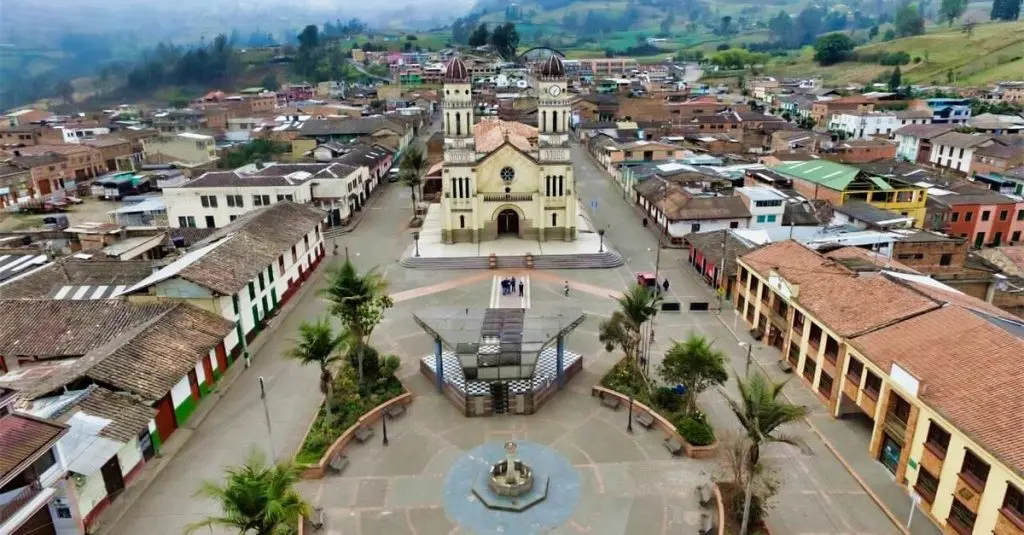
The department of Cundinamarca is one of the 32 departments that make up the Republic of Colombia.
The Founding of the Department of Cundinamarca
The history of the department of Cundinamarca dates back to the pre-Columbian era, when the region was inhabited by different indigenous groups. One of the most important groups was the Muisca, who inhabited the central region of Colombia and had their capital in Bacatá, now known as Bogotá.
In 1538, the Spanish conquistador Gonzalo Jiménez de Quesada arrived in the region and founded the city of Santa Fe de Bogotá. In 1550, the territory of the current Cundinamarca was created as the province of Santa Fe, which covered a large part of the central Andean region of Colombia.
In 1564, the province of Santa Fe was divided into two, giving rise to the province of Cundinamarca, which included the cities of Tunja, Honda, Mariquita, among others.
During the colonial era, Cundinamarca was an important economic and cultural center. The region was characterized by the production of gold and silver, as well as the construction of important architectural works, such as the cathedral of Zipaquirá and the Teatro Colón in Bogotá.
The Republican Era and the Consolidation of the Department of Cundinamarca
The history of the department of Cundinamarca continues with the independence of Colombia in 1810, the province of Cundinamarca became a department of the Republic of Gran Colombia, which covered the territories of Colombia, Ecuador, Panama, and Venezuela. During this period, Cundinamarca was an important political and cultural center of the Andean region.
In 1857, the Granadine Confederation was created, which became the United States of Colombia in 1863. During this period, the department of Cundinamarca consolidated as one of the most important departments of Colombia, with a diversified economy and a rich culture.
In the 20th century, Cundinamarca became an important industrial and commercial center. The region was characterized by the production of manufactured goods, the construction of important road infrastructure, and the consolidation of important urban centers, such as Bogotá and Soacha.
The Recent History of the Department of Cundinamarca
Currently, Cundinamarca is one of the most important departments of Colombia in economic, cultural, and political terms. The region is an important center of agricultural, industrial, and tourist production.
In 1886, the new Political Constitution of Colombia ratified the country's territorial and administrative division, and Cundinamarca became one of the 34 departments of the country.
During the 20th century, the department of Cundinamarca experienced significant economic and population growth, especially in the Sabana de Bogotá region. The construction of the road network and the arrival of the railroad contributed significantly to this expansion.
In the 1950s, the department suffered a period of violence known as La Violencia, which left a toll of thousands of dead and displaced. During this time, armed groups from the left and right clashed in a struggle for political power in the country.
In the following decades, Cundinamarca consolidated itself as one of the main political, economic, and cultural centers of Colombia. In the 1970s, El Dorado International Airport was built, making Bogotá an important transportation hub at the national and international level.
In the 1990s, the Bogotá Free Trade Zone was created, which boosted trade and foreign investment in the region.
Currently, the department of Cundinamarca remains one of the country's main economic engines, with a diverse economy that includes sectors such as agriculture, mining, industry, and services.
Additionally, it has important tourist sites like the Salt Cathedral of Zipaquirá, Chingaza National Natural Park, and Guatavita Lagoon, which attract thousands of visitors every year.
The history of the department of Cundinamarca has been a reflection of the changes and transformations of Colombia over the centuries, and it remains a fundamental part of the country's identity and culture.
Other data on the history of the department of Cundinamarca
Throughout its history, Cundinamarca has also been the scene of important political and cultural events. In 1810, in the city of Bogotá, the Cry for Independence took place, which marked the beginning of the struggle for the country's independence.
During the 19th century, the region witnessed important battles in the War of Independence, such as the Battle of Boyacá in 1819, which sealed the definitive victory of the Liberation Army over the Spanish forces.
In the cultural sphere, Cundinamarca has been the birthplace of important figures in literature, music, and the arts. Among the department's most notable writers are José Asunción Silva, Rafael Pombo, and Soledad Acosta de Samper.
In music, the department is known for the bambuco, one of the most representative musical genres of Colombia, which has its roots in the Andean region, including Cundinamarca.
In the visual arts, the department has important museums and galleries, such as the National Museum of Colombia and the Museum of Contemporary Art of Bogotá.
Definitely, the history of the department of Cundinamarca is rich and varied, reflecting the complexity and diversity of Colombia.
From its pre-Hispanic origins to the present day, Cundinamarca has been an important player in the country's history and development, with a culture and identity of its own that distinguish it from other regions.
With its historical, cultural, and natural heritage, the department remains a destination of interest for national and international visitors, and a place of great importance for Colombian society as a whole.
Additionally, during the 20th century, Cundinamarca became one of the main drivers of economic and social development in Colombia. The creation of the Bogotá Industrial Zone in the 50s boosted the industrialization of the city and the region, turning it into a first-class production and services center in the country.
In the 60s, the department underwent a significant transformation in its economic and social structure, which was reflected in the creation of new cities and the modernization of its road, energy, and communications infrastructure.
In recent decades, Cundinamarca has continued to consolidate itself as one of the most important regions in Colombia.
The creation of the Central Region in 1996, which includes Bogotá and the departments of Cundinamarca, Boyacá, Tolima, and Huila, has allowed for greater coordination and planning in the development of the region, promoting large-scale initiatives and projects in different areas such as infrastructure, education, tourism, and culture.
Currently, Cundinamarca is a dynamic and constantly growing department, which continues to play a crucial role in the economic, social, and cultural development of Colombia. With its rich history and vibrant present, the region continues to attract visitors and investors, and consolidates itself as a place of great importance and attractiveness for the country and for the world.